

Ukraine Pulse and Soybean Association (UPSA) held its first working meeting dedicated to the new state program supporting distributed generation for large and medium-sized businesses. The event brought together representatives of the Ministry of Economy of Ukraine, energy equipment manufacturers, and agricultural companies, including UPSA members who are already investing or considering investing in their own generating capacities.
The discussion centered on the Cabinet of Ministers of Ukraine Resolution No. 594 of April 29, 2026, "On Certain Issues of Implementing an Experimental Project for Providing State Financial Support to Business Entities Implementing Projects in the Field of Distributed Generation," under which, starting June 1, Ukrainian businesses gained the opportunity to raise financing at 10% per annum to create their own generating capacities.
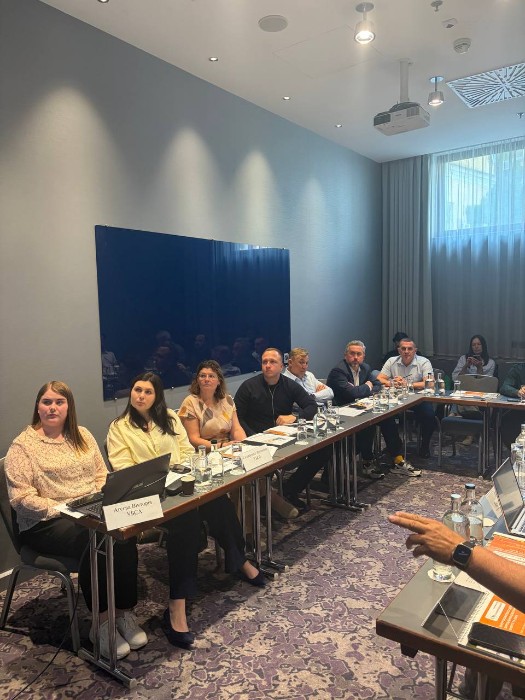
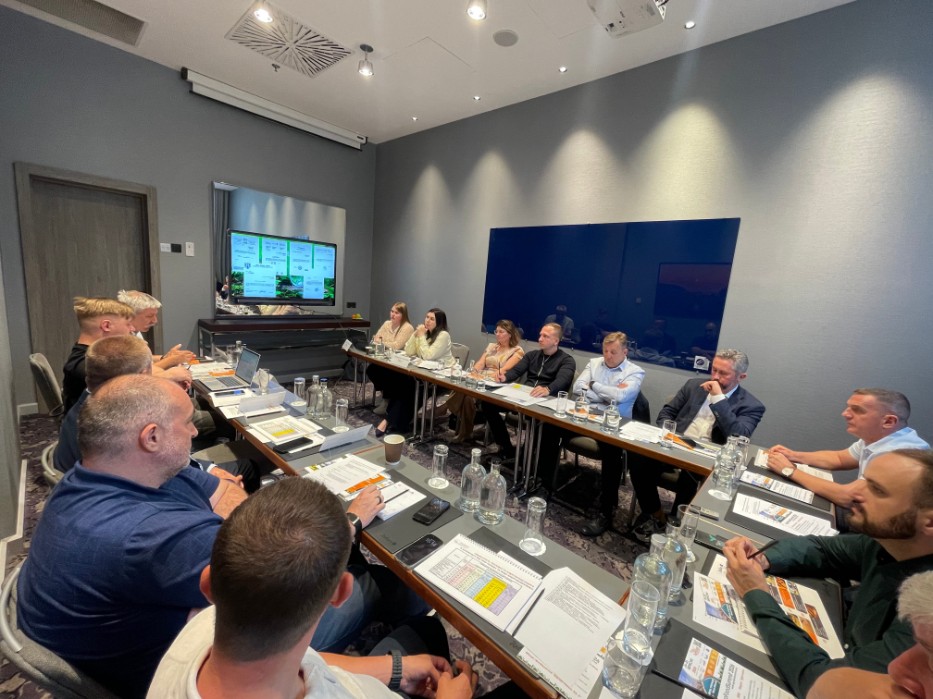
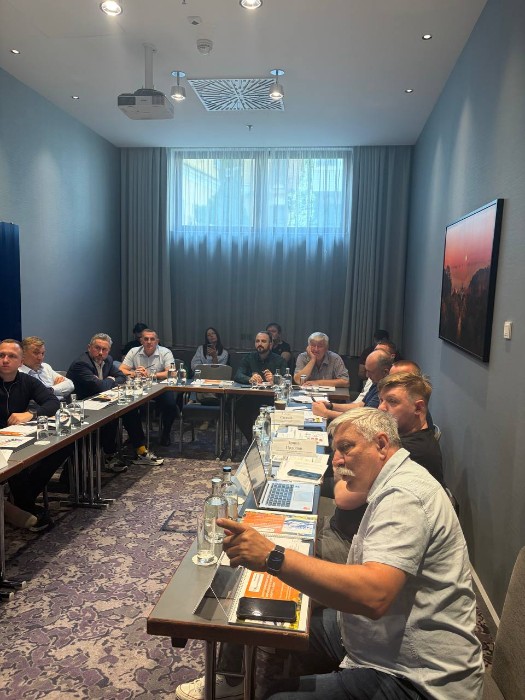
Participants discussed the mechanism of state support, financial instruments for project implementation, technological solutions for using agricultural waste as fuel, and the practical experience of operating bioenergy facilities. The meeting was the first platform where potential program participants could ask questions directly to the government representatives and companies that had already implemented similar projects.
Antonina Sklyarenko, President of the Ukraine Pulse and Soybean Association, noted that the agricultural sector possesses a great potential for developing its own energy generation facilities owing to significant volumes of biomass and processing waste:
"Our association became interested in this program as energy generation is extremely important for farmers, particularly given the opportunity to use waste from soybeans, sunflower, and other raw materials. It is essential to inform businesses how the new program works and what opportunities it opens up. This is the first time we have brought together companies that are already interested in the state energy independence program."
The new financing mechanism was developed after surveying enterprises seeking to invest in their own generation but which previously lacked the necessary instruments of state support.
Roman Kropyvnytskyi, Director of the Industrial Policy Department at the Ministry of Economy of Ukraine, emphasized:
"Business has identified two factors important for investment in energy projects. The first is the market loan rate, because at 15–16%, companies did not want to invest due to the long payback period of projects. The second is state guarantees. That is exactly why we issued a separate resolution. This is not the '5-7-9' lending program, but rather a separate mechanism, although it has similar operating principles. As for now, we have already allocated 319 million hryvnias to the budget program as a separate funding area. We are currently reviewing five applications with a total loan portfolio of about 600 million hryvnias. According to our calculations, this program will support a loan portfolio of about 12 billion hryvnias by the end of the year."
Following the program concept presentation, participants received a step-by-step explanation of the algorithm for obtaining state support, from submitting an application to securing financing and implementing the project.
Yevhenii Glaus, head of the budget program management division at the National Development Institution, said:
"An enterprise submits an application to one of the participating banks. After that, when the application is handed over to us, we evaluate it, and following that, the Ministry of Economy approves it. As of now, about 15 banks have already joined the program, and this circle will continue to widen. After approval, the enterprise continues to implement its submitted project together with the bank."
During the event, participants examined the practical aspects of implementing distributed energy generation projects. Kotloenergoproekt LLC, which has been designing and building energy facilities running on agricultural waste and other biofuels for more than three decades, presented its solutions. During the presentation, the company showcased examples of implemented bioenergy projects and also calculations of the economic efficiency of various fuel types.
Volodymyr Lifshyts, Director of Kotloenergoproekt LLC, noted that the key factor for the success of any project is the correct choice of fuel base and configuration of the future thermal power plant:
"We see that capital costs depend directly on the plant's proper capacity. The cost is approximately 2 million dollars per megawatt for plants with a capacity of 10 to 35 MW, while for smaller facilities, it is up to 2.5 million euros per megawatt. For example, the cost of electricity production is about 2 hryvnias per kWh for a plant running on elevator waste that costs 2,000 hryvnias per ton. At the same time, for natural gas, this figure can reach up to 11 hryvnias per kWh. Therefore, the correct choice of fuel is a key condition for the project's economic efficiency. Accordingly, aiming to reduce the cost of electricity generation, Kotloenergoproekt develops and manufactures energy boilers for industrial CHP plants that can run on various types of biomass."
Enterprises that had already operated bioenergy facilities also shared their practical experience implementing such projects. This allowed meeting participants to assess not only the theoretical advantages of the technology but also its effectiveness under real production conditions.
Oleksii Sukhinin, Director of Kvants LLC (Potoky OEP), also shared the experience and told the participants that the thermal power plant built for the enterprise successfully operated on various types of biomass until it was damaged during Russia’s war against Ukraine.
"Kotloenergoproekt designed a plant for us and installed two boilers. We successfully operated it until 2025 and used practically all the fuel types listed today. In fact, that's all the types of biomass available in Ukraine," he noted.
The participants paid particular attention to making the most efficient use of Ukrainian raw materials for energy production. According to them, a significant share of agricultural waste that is currently exported or not utilized to its full potential could become the basis for developing distributed generation within the country and strengthening Ukraine's energy independence.
Oleksandr Aleksandrov, Head of the Development Department at Kotloenergoproekt LLC, presented the calculations on the potential usage of sunflower husks as an energy resource.
"On average, Ukraine produces about 4 million tons of sunflower husks per year. About 30% is used for technological needs, while the rest could be turned into fuel for distributed generation. If this husk is kept in Ukraine instead of being exported, it could become a significant resource for electricity production," the expert believes.
The participants of the meeting also discussed the prospects of using energy crops as a distinct area of bioenergy development. At the same time, the farmers noted that even though this field has significant potential, it requires more practical experience.
Anton Zhemerdieiev, Commercial Director at TAS Agro, said:
"There's already a company operating within TAS Agro that's engaged in the industrial cultivation of energy willow. We are looking in this direction, yet it's not a simple business, I can say. There are multiple technological nuances to that."
Representatives of MHP, Ukrprominvest-Agro, Agrarian System Technologies, Promin Peremohy LLC, and PK Zoria Podillia LLC also joined the discussion of energy independence issues.
The high level of engagement of agricultural companies in the meeting confirmed significant business demand for practical information on developing their own energy generation.
The participants of the event emphasized that the development of distributed generation in the agricultural sector requires not only financial instruments but also ongoing dialogue between the government, equipment manufacturers, and businesses. Therefore, the Ukraine Pulse and Soybean Association plans to continue holding such meetings for farmers to help enterprises make the most of the opportunities offered by the new state support program.